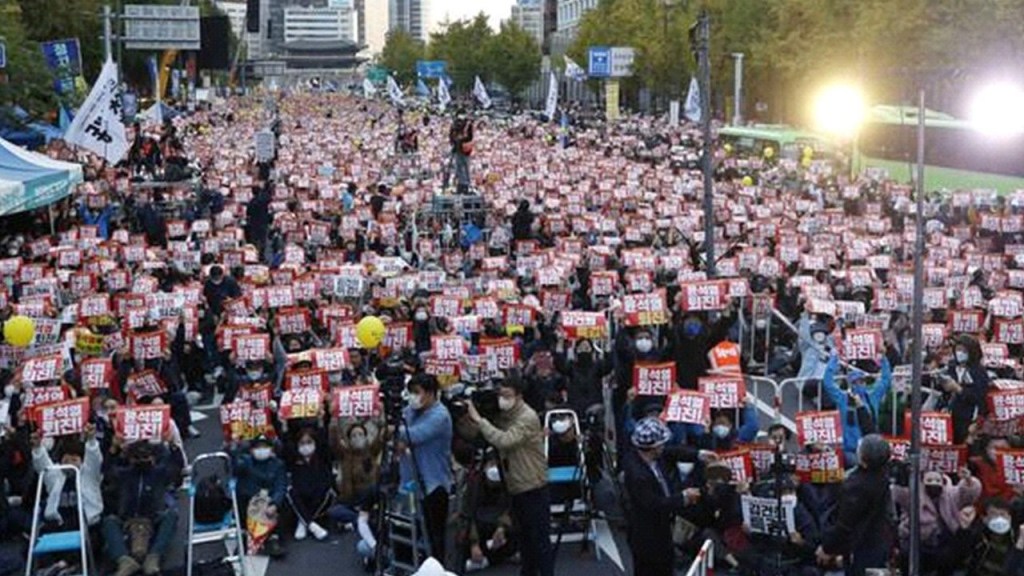
SUPPORT PALESTINIAN LIBERATION

THE PALESTINIAN STRUGGLE FOR LIBERATION TAKES ON NEW HEIGHTS

At the early light of 7 October 2023, Palestinians broke through the Gaza siege by land, sea and air. It came on the 50th anniversary of the 1973 war when Egypt retook Sinai from Zionist occupation. This resistance is not unprovoked. It is spurred by decades of ethnic cleansing, genocide, displacement, and daily aggression by Zionist Israel.

The Palestinian resistance is taking on new heights not only for Gaza but also in the West Bank and all occupied lands. It is a call for liberation for the Palestinian people and all under Israeli attack especially in Syria, Lebanon, Yemen, and Iraq.

The flaunted “iron dome” of Israel is pierced.  Walls and fences were breached. The “rock solid” US support for Israel is crumbling even with the $158 billion in US assistance to Israel in its entire history. US-brokered “normalization” of Arab relations with Israel is shaken. The grand scheme of US imperialism with Zionist Israel to control the people and resources in the so-called “greater Middle East” is further eroded.

Even the United Nations failed to implement its own previous resolutions on the right to resist and self-determination including UN Resolutions 3236 which reaffirmed the inalienable rights of the Palestinian people to self-determination, national independence and sovereignty, and the right of the Palestinians to return to their homes and property and UN Resolution 2625 which provides further development of the right to self-determination.

No amount of weaponry, high-tech intelligence, and sophisticated hardware can stop the resolute Palestinian people’s resistance

The US has dispatched the USS Gerald R. Ford carrier strike group, including the guided missile cruiser USS Normandy and four guided-missile destroyers, to the Eastern Mediterranean.  Israel has amassed 100,000 troops at the border, called 300,000 reservists and bombardment into densely populated Gaza in two days killing over 400 Palestinians including 78 children.

US intervention can escalate the situation into a regional aggression

While militant Palestinian groups hold dozens of Israeli soldiers and illegal settlers, most of whom are militarily trained and armed, the Zionist regime has imprisoned over 8,000 Palestinians including 39 women and 170 children, with over three thousand administratively held without charges.

The corruption-laden rightist coalition of Israel Prime Minister Netanyahu supported by US president  Joe Biden, who is embroiled in domestic crisis, and their European allies including Britain, Germany, France and Italy have nothing to show to the world but greater aggressive attacks on the Palestinian people.

Meanwhile, Egypt, Saudi Arabia and Turkey have called for restraint

The war will not end and no peace will be sustainable without addressing the root causes of settler colonialism and oppression. People’s resistance is imperative to address these root causes and liberate the people, to create deterrence against daily Israeli violations that go by with impunity, and to end the sanctions.

Only a more united and stiffer resistance by the Palestinians and the solidarity of all oppressed peoples can stop this new wave of imperialist and Zionist aggression.

No Cluster Bombs!

he Resist US-Led War Movement condemns the reckless decision by the US government to supply cluster munitions to the Ukrainian military.[1] This will not only escalate the fighting in Ukraine, sending chances of a peaceful resolution further from reach, but it will make the war much more costly for civilian casualties, as has been proven by countless studies on the indiscriminate use of these deadly bombs.

Cluster munitions have been banned by over 120 countries and are sanctioned by the UN.[2] Cluster munitions became subject to UN convention due to their indiscriminate violence. These weapons take the form of a missile filled with smaller “bomblets” that are ejected in all directions when fired, spreading a series of explosions throughout an entire blast area. This makes them impossible to fire with precision, as by nature, they are meant to cause maximum damage to where they are fired.[3] They can also be armed with depleted uranium to make them “dirty” bombs spreading long-lasting radioactive debris.[4]

In addition, many of these bomblets do not explode upon impact. They can remain pieces of active ordinance for long periods, causing harm and death to civilians unknowingly walking near them when they explode. This makes their use by the US and their procurement to other countries illegal under international law, and it has even garnered criticism from the US’s own NATO allies such as the UK, Canada, and Spain.[5][6] The US and Russia, the US’ main target in the NATO proxy war in Ukraine, have not signed onto the treaty banning cluster munitions, meaning that Ukraine will become a further hellscape for civilians.[7]

This has been proven in areas bombed by Israel – a key ally and satellite state of the US, which has also not signed onto the UN convention against cluster munitions.[8] Israeli air raids are notorious worldwide for their incredibly high civilian death rate. The US has proved that it fully intends to make Ukraine, which has also refused to sign the convention, play a similar role to Israel as a satellite state and puppet military force. This further enables the US to sit back and appear to keep its hands clean while they force others to fight their wars of aggression.

NATO weapons to Ukraine have brought the war further from peace every step of the way. First with intermediate missiles, then tanks, then fighter jets, followed by promises of long-range missiles and advanced fighter jets at the G7 Summit, and now cluster munitions – these acts highlight how far in harm’s way the US and NATO are willing to put civilians in their desperate attempt to keep the post-Cold War unipolar world order in place.[9][10][11][12] With talks of so-called “tactical nuclear weapons” remaining on the table, this move could set a dangerous precedent.[13][14] Since so much fighting has been taking place within city outskirts in Ukraine, this development marks a harrowing future for Ukrainian and Russian-speaking civilians caught in the middle of the US’s deadly gamble against the political rise of Russia.

With this act of sending cluster munitions to Ukraine, the US has proven that it intends to disregard international humanitarian law whenever it chooses. As the 2023 NATO Summit begins in Vilnius, Lithuania, the world’s people must unite their voices in rage to hold the regime in Washington accountable for this dangerous act!


[1] https://abcnews.go.com/Politics/kirby-explains-us-sending-controversial-cluster-munitions-ukraine/story?id=100903339
[2] https://www.aljazeera.com/news/2023/7/7/us-to-give-ukraine-widely-banned-cluster-munitions-despite-fears
[3] http://www.stopclustermunitions.org/en-gb/cluster-bombs/what-is-a-cluster-bomb.aspx
[4] https://www.bbc.com/news/world-65051330
[5] https://www.bbc.com/news/uk-66142554
[6] https://www.abc.net.au/news/2023-07-09/ukraines-supply-of-cluster-bombs-from-us-cops-criticism-from-hu/102580548
[7] https://www.bbc.com/news/world-10829976
[8] https://edition.cnn.com/2007/WORLD/meast/12/25/israel.cluster.bombs/index.html
[9] https://edition.cnn.com/2022/06/26/politics/us-missile-defense-system-ukraine-coming-announcement/index.html
[10] https://news.yahoo.com/russia-fumes-over-nato-tanks-heading-to-ukraine-revealing-a-kremlin-coming-to-grips-with-reality-154959457.html
[11] https://www.newsweek.com/fighter-jets-ukraine-full-list-poland-slovakia-russia-1788795
[12] https://www.npr.org/2023/05/21/1177394656/ukraine-zelenskyy-russia-g7-f16
[13] https://www.bbc.com/news/world-60664169
[14] https://www.theguardian.com/world/2022/sep/28/ukraine-nato-russia-nuclear-weapons-devastating-poland-foreign-minister

NOTES: RESPONSES BY LAOS AND CAMBODIA

Laos voices concern over the announcement and the possible use of cluster munitions
The Lao People’s Democratic Republic has expressed its profound concern over the announcement of the supply and possible use of cluster munitions.
The Ministry of Foreign Affairs on Monday issued a statement on the use of cluster munitions.
“As the world largest victim of cluster munitions and a state party to the Convention on Cluster Munitions, the Lao People’s Democratic Republic expresses its profound concern over the announcement and the possible use of cluster munitions,” the statement said.
“The Lao people were victimised by this deadly cluster munition more than five decades ago and even today they continue to be affected by the unexploded ordnance as it continues to pose serious threats to the lives and livelihood of our people.
Therefore, the Lao PDR calls upon any state or actor to refrain from all use, production, transfer and stockpiling of cluster munitions as prescribed in the Convention on Cluster Munitions so that no one in the world would be victimised by such heinous weapon.”
By Times Reporters
(Latest Update July 11, 2023)

Cambodian PM Hun Sen urges Ukraine not to use US cluster bombs
July 10, 2023
Cambodian Prime Minister Hun Sen, whose country still grapples with deadly war remnants, on Sunday urged Ukraine not to use cluster bombs, after Washington announced plans to send the weapons to Kyiv to fight Russian troops.
Humanitarian groups have strongly condemned the US decision to supply cluster munitions, which can go undetonated and potentially endanger civilians for years to come.
“It would be the greatest danger for Ukrainians for many years or up to a hundred years if cluster bombs are used in Russian-occupied areas in the territory of Ukraine,” Hun Sen tweeted.
He cited Cambodia’s “painful experience” of US cluster munitions dropped in the early 1970s, a foreign legacy that has left tens of thousands maimed or killed.
“It has been more than half a century. There have been no means to destroy them all yet,” Hun Sen added.
“As my pity for the Ukrainian people, I appeal to the US president as the supplier and the Ukrainian president as the recipient not to use cluster bombs in the war because the real victims will be Ukrainians,” he said.
Washington said it had received assurances from Kyiv that it would seek to minimise the risk to civilians, with US President Joe Biden admitting that supplying Ukraine with the weapons was a “difficult decision”.
The United States dropped millions of bombs on Cambodia and Laos during the Vietnam War in the 1960s and 1970s in an attempt to hit communist bases.
And following 30 years of civil war which ended in 1998, Cambodia is among the most heavily mined countries in the world.
The effects of the US bombing campaign and minefields left from conflict have long been felt, with around 20,000 Cambodians killed over the last four decades after stepping on landmines or unexploded ordnance.
Clearance work continues to this day, with the government vowing to clear all mines and unexploded ordnance by 2025.
In January, a group of Ukrainian deminers visited Cambodian minefields to learn from decades of bitter experience.
By Agence France-Presse

https://www.vientianetimes.org.la/freeContent/FreeConten_132_Laos_voices_y23.php

END THE KOREAN WAR!

Stop U.S. War Provocations in the Korean Peninsula!

Fight for Peace, Prosperity and Reunification!

On 27 April 2018, during the 2018 inter-Korean summit, the Panmunjom Declaration for Peace, Prosperity and Reunification of the Korean Peninsula was adopted between Kim Jong Un, the Supreme Leader of North Korea, and Moon Jae-in, the President of South Korea. Several actions were taken toward reunification along the border.

South Korea hosted the Winter Olympics in 2018 and President Moon Jae-in invited North Korean participation, leading to senior-level talks and three inter-Korean summits.

At the historic Singapore Summit in June 2018, the United States and North Korea committed to establish “new U.S.-DPRK relations”. President Trump made the unconventional decision to suspend major joint U.S.-South Korea military exercises and meet directly with Chairman Kim.

Meanwhile, the previous Moon Jae-in administration came up with the so-called “Three Nos” policy — no additional deployments of Terminal High Altitude Area Defense (THAAD) batteries, no South Korean integration into a U.S.-led regional missile defense system and no trilateral alliance with the U.S. and Japan.

All these positive steps have now been reversed by the United States.The vision to transform the Armistice Agreement to a Permanent Peace Treaty and eventual reunification was undermined.

US intensifies war provocation

The U.S. resumed large-scale military drills last year, sending a nuclear-armed submarine to South Korea for the first time in 40 years, along with other assets, including nuclear-capable bombers.

This year, the US and South Korea held their biggest joint field exercises in five years, as the U.S. flew a long-range B-1B bomber to the Korean Peninsula.

In addition, the US now wants the THAAD system deployed in Seongju, North Gyeongsang Province in 2017 to be permanently based despite strong opposition from local residents and protests by China.

In April this year, the so-called Washington Declaration considered as a “software upgrade” was issued by presidents Joe Biden and Yoon Suk-yeol expanding nuclear consultations between the United States and South Korea.

Trilateral defense cooperation between the US, South Korea and Japan has also grown in recent months. This included trilateral military drills to practice tracking North Korean missile launches as well as information-sharing exercises.

At the Shangri-La Dialogue regional security forum in June this year, the three met on the sidelines to discuss the real-time sharing of information on North Korean missiles. They plan to link their radars via a U.S. system to improve detection capabilities. Meanwhile, China snubbed a U.S. request for the countries’ defense chiefs to meet on the sidelines.

The US has about 55,000 troops in Japan, its largest forward-deployed force in the world, and about 28,500 troops in South Korea. It spends billions of dollars annually and maintains dozens of facilities in both countries.

Japan made a major break from its strictly self-defense-only post-World War II principle, adopting a new national security strategy that includes the goals of acquiring preemptive strike capabilities and cruise missiles.

The US has also expanded the use of military facilities in the Philippines and additional troop rotations in key areas facing the Taiwan Strait and South China Sea.

The US revitalized presence in the Indo-Pacific region with the Quadrilateral Security Dialogue (QSD), known as the Quad, a strategic security dialogue between the US, Australia, India, Japan. Last year, AUKUS, a trilateral security pact between Australia, the United Kingdom, and the US was announced with Australia acquiring nuclear-powered submarines.

New technologies were also adopted by the US for warfare including advanced computing, “big data” analytics, artificial intelligence, autonomy, robotics, directed energy, hypersonics, and biotechnology.

The so-called Indo-Pacific Economic Framework for Prosperity, a major trade deal led by the US to shore up Pacific markets, is an attempt to seize resources and labor for more of this high-tech war production and to continue to block North Korea and its allies out of the global market.”

The DPRK upgrades deterrence

At the Eighth Congress of the Workers’ Party of Korea (WPK) in January 2021, the DPRK sought the objective of “advancing nuclear deterrence and strengthening defense capabilities”. These include hypersonic glide vehicles and submarine-launched ballistic missiles (SLBMs). Last year, a record number of ballistic missiles (8 ICBMs included) were launched.

This year, at the 75th anniversary of the founding of the Korean People’s Army, Pyongyang revealed at least 11 Hwasong-17 missiles, the world’s largest road-mobile ICBM. Experts assess that the missile, successfully flight tested in November 2022, can carry three to four nuclear warheads. This number of multiple-warhead missiles, along with North Korea’s other ICBMs, could inundate the 44 ground-based interceptors deployed in Alaska and California. U.S. officials have indicated they would fire multiple, perhaps up to four, interceptors at each incoming warhead.

North Korea also revealed a new containerized missile that is likely the prototype of a solid-fuel ICBM. Pyongyang tested a static solid-fuel rocket engine and announced it had a thrust of 140 tons of force, greater than any U.S., Russian, or Chinese ICBM. Solid-fueled missiles reduce the time necessary for launch preparation, making them more difficult to detect and target.

These recent tests may have neutralized U.S. missile defense capabilities, such as the U.S.-deployed Terminal High Altitude Area Defense missile system and the Aegis Ballistic Missile Defense system.

In June this year, the eight enlarged plenary meeting of the Central Committee of the ruling Workers’ Party of Korea (WPK) reviewed its economic, diplomatic and defence strategy “to cope with the changed international situation”.

North Korea asserts that its missile tests are for self-defense from direct US military threats, and they have not harmed the safety of neighboring countries and regions.

Although a long-range rocket carrying its first military reconnaissance satellite crashed last May, North Korea is determined to put into orbit and operate.

Some South Korean analysts now believe that the US discusses North Korean issues with Seoul not because it seriously intends to resolve them but more to persuade the South Korean government to help the US compete against Beijing. Many doubt that the US is willing to sacrifice San Francisco for Seoul.

Fight for peaceful reunification

The Korean people with its proud history of 5,000 years remains divided after the US imperialist Korean War of 1950-53 with some five million lives lost.. The US may have forgotten this costly war, but the Chinese and the Korean people have not.

In the face of intensified US war provocations in the region and throughout the world, workers and other oppressed peoples have the right to fend for themselves and fight against the desperate hold of US imperialism for hegemony.

The US, currently embroiled in its NATO war in Ukraine against Russia, faces strategic rivalry with China and is embattled with its own domestic issues amid the worsening monopoly capitalist crisis.

It is imperative for all anti-imperialist and democratic forces to unite with the Korean people in their aspiration for peace and reunification. The real deterrent against a nuclear holocaust is our solidarity against imperialism.

Thus the International League of People’s Struggle calls on all its member organizations and allies to mobilize and hold protest actions in their own countries to condemn US war provocations and intervention in the Korean peninsula. Let us expose and oppose Japan and South Korea’s support to US agenda of war and militarization of the Asia-Pacific region. Let us support the Korean peoples’ struggle for the peaceful reunification of the Korean peninsula.

###

Signed:

Len Cooper

Chairperson

Zone for Peace

APRIL 4, 2023—Today, the Black Alliance for Peace (BAP) will launch a collective campaign for a Zone of Peace in Our Americas with organizations throughout our region in Washington, D.C.; Havana, Cuba; and Port-au-Prince, Haiti.


The “Zone of Peace” concept emerged from the January 29, 2014, meeting of the heads of state and governments of the Community of Latin American and Caribbean States (CELAC), all of which declared Latin America and the Caribbean should be seen and respected as a “Zone of Peace.” BAP is leading an effort to activate the popular movement element of this state-centered declaration by building support for its
implementation across the region.


Organizations and key allies such as SOLI of Puerto Rico; Asociación de Trabajadoresdel Campo (ATC) (Nicaragua); MOLEGHAF (Haiti); the Task Force on the Americas; the Organisation for Caribbean Empowerment; Observatorio de Derechos Humanos de los Pueblos (México); the Black Is Back Coalition for Social Justice, Peace and Reparations; the U.S.-based United National Antiwar Coalition (UNAC); Alliance for Global Justice; and others, have signed on to support a collective campaign for a
Zone of Peace in Our Americas.

The effort to build a region-wide campaign to expel the forces that bring death, political destabilization and destruction to our region will be informed by the principles of the Black Radical Peace Tradition. The Black Radical Peace Tradition asserts that peace is not the absence of conflict, but rather the achievement by popular struggle and self-defense of a world liberated from the interlocking issues that contribute to global conflict. This would be accomplished through the defeat of the global systems of oppression that include colonialism, imperialism, patriarchy and white supremacy.

This call for peace is an appeal to the peoples and states of the Caribbean and Latin America to resist the U.S./EU/NATO Axis of Domination, as well as the increasing militarization of the region and U.S./NATO soft power practices in Our Americas.

“The people want peace,” says Erica Caines, Black Alliance For Peace Haiti/ Americas Team Co-Coordinator. “The Zone of Peace means strengthening alternative, people(s)-centered systems through coordinated anti-militarist and anti-imperialist struggle.”

Through a multi-phase campaign, we will build awareness and political education around the necessity and purpose of a Zone of Peace, as well as initiate the formation of an anti-militarist, anti-imperialist network anchored by popular, mass-based organizations.


“Establishing the Caribbean as a Zone of Peace will be an important achievement for the peoples of the region, removing military bases of former and current colonial powers, and abolishing the regular military exercises and other forms of interference would be a significant contribution to creating the other world of peace, development and cooperation that is possible and attainable,” says Shaun
Ajamu Hutchinson of the Caribbean Organisation for People’s Empowerment.


Initial Core Demands
1. Dismantle SOUTHCOM. Shut down the 76 U.S. military bases in the region
2. End U.S./NATO military exercises. Close foreign military bases, installations and
enclaves, as well as withdraw foreign occupation troops
3. Disband U.S.-sponsored state terrorist training facilities. Shutter the “Western
Hemisphere Institute for Security Cooperation” (WHINSEC)—formerly the School of the
Americas—in Fort Benning, Georgia, United States, and terminate U.S.—as well as
foreign—training of police forces
4. Oppose military intervention into Haiti. Support the people(s)-centered movement
for democracy and self-determination
5. Return Guantánamo to Cuba. The United States must give back to the Cuban people
and their government the territory it illegally occupies
6. Sanctions are war. End illegal sanctions and blockades of regional states,
including all economic warfare and lawfare, and recognize their sovereignty

Lifting up as a popular demand that our region be free of internal and
externally-imposed state violence is even more important today as it was when the declaration was issued in 2014. From the assault on democracy in Haiti to the subversion and illegal sanctions directed at Cuba, Venezuela and Nicaragua, the states in Latin America and in the Caribbean continue to find themselves in an existential battle against the geo-strategic interests of the hegemon to the North—the United States of America.

BAP believes it is only through the concentrated efforts of the people that the Americas will free itself of the anti-human, anti-democratic and violent policies that wars, subversion and militarism have brought to the peoples and nations in our region.

comunicaciones@blackallianceforpeace.com

(202) 643-1136

MAY 18-20 ACTION DAYS AGAINST THE G-7

As a show of global solidarity, the International League of Peoples’ Struggle joins the International People’s Front in the upcoming People’s Summit and Mass Actions from May 18-20 in Kyoto and Hiroshima, Japan. We call on all member organizations, country chapters, and allied networks to participate in the International Days of Action Against the G-7 on the said dates. 

Monopoly capitalist greed, imperialist competition, and wars of aggression have brought the world’s people and the planet to the brink of unprecedented existential crisis. In this context, the US, especially with its imperialist allies and agents in the Group of 7 (G7), relentlessly wage wars of aggression in many forms against competitor powers and against the peoples of the world.  Bearing the brunt of the horrors of war are the people, especially the working class, who are killed, displaced, malnourished and starved, and left to deal with the poisoning, plunder and destruction of land, food systems, and natural resources in the aftermath.

The US-imperialist alliance of the world’s largest western economies, which alone account for only 10% of the world’s population but over half of global net wealth at over $200 trillion, will gather to pursue their economic agenda, while attempting to whitewash the history of war and nuclear annihilation. The G7 countries represent the rich and powerful minority over the poor and less powerful majority of the world.  It is an institution of global economic and political supremacy.

The objectives of the activities are:

  1. Expose and oppose how the G7 promotes militarism to facilitate economic expansionism in the multiple fronts of US-led war in the world
  2. Highlight and generate support for people’s resistance to the G7, imperialist war and militarism
  3. Build the movement against US-led wars; military bases, troops and exercises; weapons and weapons testing including drones and nuclear arms; and all manifestations of the pivot to Asia

The series of mobilizations will peak on May 20 with a protest march in Hiroshima. 

End the Balikatan War Exercises

The Armed Forces of the United States and the Philippines will be holding the 2023 Balikatan Exercises from April 11 to 28, 2023 in various provinces of the Philippines. These exercises are nothing but a blatant display of US imperialism’s military intervention and aggression in the country and region. They are aimed at strengthening the US domination and control over the land, resources, and people of the Philippines, and undermining the Filipino people’s sovereignty and self-determination.

This year’s Balikatan will be the largest joint military exercise between the Philippines and the US to date, with over 17,600 troops participating. This shows the escalation of US militarism and warmongering in Asia-Pacific, especially amid the rising tensions and conflicts with China and other rival powers. The US is using the Philippines as its pawn and base for its hegemonic interests and schemes, while trampling on the country’s national dignity and independence.

The Balikatan is also a violation of the human rights and democratic rights of the Filipino people. The presence of foreign troops in local communities poses a grave threat to safety, security, and welfare of the people. We have witnessed how these exercises have resulted in environmental destruction, displacement of indigenous peoples and peasants, sexual abuse and exploitation of women and children, extrajudicial killings, torture, harassment, and intimidation of activists and critics.

The Filipino people reject the false claims of the US and Philippine governments that the Balikatan is for their benefit and development. These exercises are not for humanitarian assistance or disaster relief, but for advancing the interests of the US military-industrial complex and its local lackeys. They are not for enhancing the Philippines’ defense capabilities or security cooperation, but for subverting the country’s national sovereignty and territorial integrity.

In addition, we join the Filipino people in denouncing the Mutual Defense Treaty, Visiting Forces Agreement (VFA) and the Enhanced Defense Cooperation Agreement (EDCA), which serve as legal bases for the Balikatan exercises and other forms of US military presence and intervention in the Philippines. The VFA is a one-sided agreement that grants special privileges and immunities to US personnel who commit crimes in their country, while depriving them of jurisdiction over them. The EDCA is an unconstitutional agreement that allows the US to establish de facto military bases in their territory without any rent or compensation. These agreements are detrimental to their national interest and security, and must be abrogated immediately.

With the recent announcement of four new locations, the US will gain access to Philippine military bases under the EDCA. These locations are strategically situated near Taiwan and the West Philippine Sea, where China has been asserting its expansive claims and militarizing disputed islands. The new locations are:

● Balabac Island in Palawan, which is close to the Spratly Islands where China has built military outposts on artificial islands

● Naval Base Camilo Osias in Santa Ana, Cagayan province, which is only 500 kilometers (310 miles) from Kaohsiung, Taiwan’s third-largest city

● Lal-lo Airport in Cagayan, which can accommodate large transport aircraft and serve as a staging area for US forces

● Camp Melchor Dela Cruz in Gamu, Isabela, which is home to the Philippine Army’s 5th Infantry Division and can host US ground troops

These new locations will increase the US military footprint and influence in the Philippines and the region, while exposing the Filipino people to greater risks of conflict and violence. The Filipino people do not want their country to be used as a pawn or a base by any foreign power that seeks to dominate and exploit them. We demand that the US respect their sovereignty and territorial integrity, and stop meddling in the country’s internal affairs.

The International League of Peoples’ Struggle (ILPS) calls on all  democratic and progressive forces around the world to oppose the upcoming Balikatan Exercises and demand its immediate cancellation. We urge all peace-loving peoples to join the Filipino people in resisting US imperialism’s intervention and aggression in their country and region. We affirm our solidarity with all oppressed and exploited peoples who are fighting for liberation and emancipation from imperialist domination.

Down with US imperialism!
Long live international solidarity!
Advance the people’s struggle for self-determination!

Signed:

Len Cooper
ILPS Chairperson
10 April 2023

For further discussion on the coming US-China war, check out this discussion: https://www.youtube.com/watch?v=kdq2urNA2GE

UKRAINE!-INNOCENT BYSTANDER OR IMPERIALIST PUPPET? 

ILPS Chairperson Len Cooper’s Statement on the Anniversary of the Ukraine War March 15, 2023 

The current military action in Ukraine has reached its 12 months mark. Over that time the people of the world have been the subject of an extraordinary and ongoing barrage of U.S.-NATO propaganda in the mass media, underpinned by the usual nonsensical claims that they are fighting for the freedom, democracy and independence of Ukraine. 

This military action in Ukraine began many years ago due to U.S.- NATO expansionism. The U.S.-NATO propaganda covers up the long history of U.S. aggression, military base building around Russia and deliberate breach of agreements particularly by the U.S. and NATO. It makes no mention of the illegal overthrow of the pro-Russian elected President of Ukraine by the U.S. in 2013 and 2014. 
The U.S.-NATO war mongers have deliberately generated this unacceptable military outrage by using Ukraine. They are prepared to use their puppet Government in Ukraine as a proxy to engulf the region and potentially the world in war to further their Imperialist ambitions. 

To quote our dear departed Comrade Joma Sison, from a report he wrote last year:  

Is the special military operation of Russia simply a unilateral and unprovoked act of aggression? Or is it after 8 years of Kyiv puppetry to US and NATO, and brutal fascism against Russian Ukrainians, a delayed response of counter-aggression by Russia to the prior NATO expansion in violation of the Minsk Agreement of 1991? 

Is it not a fact that Russia followed international law by first recognizing the people’s republics of Donetsk and Lugansk and co-signing with them treaties of mutual security and defence before Russia acted accordingly?” 

Are not the majority of the people of Russian nationality in Donbas region entitled to the right of national self-determination against anti-Russian chauvinism and fascism, which has resulted in the death of 14,000 people of Russian nationality, the devastation of Donbas and Lugansk and the exile of 3 million Russians from Ukraine since 2014? 

The US and NATO and Western propaganda completely ignore the rights of the Russian nationality within the pre-fascist as well as pre-2022 context of Ukraine. 

We must not forget or ignore this above history cited by Prof. Sison as it is a main driving force in creating this conflict surrounding Ukraine. 

It is important for the world’s people to examine the cause of each and every war and military outbreak in order to analyze just who is responsible for it. 

Even if one is dubious about who is to blame for this latest military conflict, just examine the history of the world since the second world war at least, in the context of U.S. imperialism and its record. 

Judge the self-styled defenders of “freedom and democracy,” by their illegal, inhumane, vicious and despicable conduct in overthrowing and/or attempting to overthrow governments in Iraq, Libya, Venezuela, Syria, Vietnam, Nth Korea, Cuba, Afghanistan, Somalia, Chile, Yugoslavia, Nicaragua, and many others. 

They act illegally under international law, and they act totally in their own self- interest, in their own imperialist interests which have nothing to do with so-called freedom and democracy of the people, but everything to do with their constant drive for more profit and more super profits. 

Are we to accept that despite the horrific record of U.S. Imperialism since at least the Second World War, they have now changed their spots and are acting in Ukraine and the region in the interests of peace, democracy and human rights, etc? Please spare us this nonsense. 

To quote the International Peoples Front (IPF), “Many have predicted that NATO expansion would lead to this war. They were ignored. Western leaders had once assured the erstwhile Soviet Leadership that NATO would not move an inch eastward, after German reunification. By 2004 NATO had reached Russia’s border. NATO expanded into Poland, Romania, and Bulgaria and even into former parts of the Soviet Union, such as Estonia, Latvia, and Lithuania. American rockets were placed in Poland and Romania, and Ukraine armed with Western weaponry. Separatists were provoked in Georgia.” 

As usual, U.S. Imperialism-NATO lie about their intentions and their ambitions. Although on rare occasions they do blurt out their real intensions. A White House press briefing on January 25, 2022, before the Russian intervention, stated that “the U.S., in concert with its European partners, will weaken Russia to the point where it can exercise no influence on the international stage.” 

To quote Mike Whitney, author at the Global Research Centre, “The war in Ukraine is not about Ukraine. America’s articulated strategic objectives are as follows: To weaken Russia, topple its leader, take control of its vast natural resources and move on to containing China. Simply put, Washington’s escalating aggression in Ukraine is a Hail Mary pass aimed at containing emerging centres of economic power in order to preserve its waning position in the global order.” 

Capitalism and its expansionary ambition always mean war or threats of war. It is clearly evident today that U.S. imperialism is by far the main global aggressor and has been so for a long time now. 

The other problem for the world’s people is that Russia, since the overthrow of socialism in the U.S.S.R., has become a capitalist country and is also part of the global imperialist system. 
There is conflict and competition between the U.S. Imperialist block of capitalist nations, and a developing block of capitalist nations to which Russian capitalism is a part. 

This block of nations is known as BRICS, and includes Brazil, Russia, India, China, and South Africa. 

Since the start of the military action in Ukraine there has been no substantial talk of ceasefire and negotiations, particularly not from the U.S.-NATO side. 

Today, however, the BRICS countries have recently underlined support for “multilateralism” and the principles of the United Nations Charter which includes respecting the “legitimate” security concerns of all countries. 

The BRICS nations have now called for negotiations between Russia and Ukraine to resolve the Ukraine crisis. 

The U.S. camp has so far believed that making war through a proxy protagonist such as Ukraine, heavily armed and supported by the Western nations, is a winning formula. At the same time the Russian Government has believed it can prevent U.S/NATO encroachment by military force against Ukraine. 

As it stands there is a constant threat of a wider war and even the possible use of nuclear weapons. The impact of the conflict on the people of Ukraine, the people of Russia, and the people of the world, as usual in capitalist warfare, is of little or no concern. 
The world’s people must demand that military action in Ukraine and the region be replaced by a ceasefire and urgent negotiations to achieve security guarantees and peace in Ukraine and Russia. The people must unite in the struggle against U.S./NATO wars and aggression. 

As the International People’s Front (IPF) recently stated,“We cannot beg governments for peace, but we can win it through grass roots action”. 

Scrap NATO! 
Oppose imperialism and imperialist wars! 
(The ILPS website can be accessed through ilps.info or through our new domain —peoplesstruggle.org) 

END THE US-NATO WAR IN UKRAINE!


END THE US-NATO WAR IN UKRAINE!


STATEMENT OF THE INTERNATIONAL PEOPLES’ FRONT

The world is marking one year since the start of the war in Ukraine, and the people living at every corner resolutely demand an end to the carnage and crisis. The International Peoples’ Front calls on the people to unite, organize, and militantly struggle to end the US-NATO war in Ukraine!

This is a war initiated by the US via its North Atlantic Treaty Organization (NATO) alliance, and despite taking place in Eastern Europe, the US has vested interests in the outcome of the conflict and has been actively instrumenting and influencing its development. The US used covert operations to enact a coup to install a US and EU-friendly president in 2013 and began massively arming the Kyiv military against Russian-speaking separatists in the Eastern Donbas, an iron and chemical-producing region key to the US’s desired supply chain. When Ukraine actively sought NATO membership, Russia took military action. Even before, CIA advisors have advised Kyiv and its fully Western-supplied military against Russian forces, with no end in sight. The recent decision by Germany, Poland, Denmark, the Netherlands and other countries to send tanks to Kyiv marks a dire sign of escalation to come.

In this way, the Russian military operation has been defensive as its government moves to halt NATO expansion, given that NATO’s mission has been to counter strategic threats to the US such as Russia. For Moscow, this preemptive strike has been necessitated by the US and NATO’s decisive plans to destabilize Russia into submission and sweep all of Eastern Europe into its sphere of influence. Nonetheless, Russia’s operation has been one of counter-aggression since its defensive nature has not spared attacks against the people and infrastructure of Ukraine.  

This US proxy war must end. Various sources indicate a death toll over a hundred thousand, not to mention the thousands of displaced and suffering civilians due to incessant shelling on border territories. As bad as it currently is, the conflict can still escalate to catastrophic levels considering that both the US and Russia have access to nuclear arms.  But even without nuclear fallout, the conflict has significantly contributed to the global economic crisis which affects millions all over the world. This has included skyrocketing prices of food and fuel due to severe economic sanctions and the arbitrary decisions of monopoly capitalists to cut off production to influence the war but keep prices high to attempt to retain a profit. This has also led to what could have been an avoidable energy crisis in which industrialized countries have deregulated their caps on carbon emissions to maintain production in direct opposition to UN-agreed mandates on the climate crisis.

The call to end the war does not fall solely on the shoulders of the people of Russia and Ukraine – that daunting task belongs to all of us, regardless of our distance from the conflict’s epicenter.  Governments, organizations, and institutions have been demanding for a diplomatic resolution to the conflict, but a year of lobbying has proved that it is not enough. Fierce speeches fall on deaf ears, while sanctions just add to the suffering of the innocent.

Without militant pressure from below, the powers that be can simply ignore our demands for peace and justice. Because of these governments’ desire to keep the conflict going, diplomacy will not work. The people must pressure and force NATO governments to end the alliance’s eastward march and dismantle it entirely.

In the face of governments assembling their military alliances such as NATO, then the people must organize themselves to overcome and defeat the US-led war machine. Our shared aspiration for just and lasting peace must translate into concrete action to end all wars and conflicts of aggression

The people say no more!  The International Peoples’ Front carries the call to end the US-NATO proxy war in Ukraine! Peoples of all countries, unite and struggle militantly against the forces that engender endless war!  We cannot beg our governments for peace, but we can win it through grassroots action!

peoplesstruggles.org

FB: ILPSOfficial

Japan Rearms

By Sara Flounders posted on December 28, 2022 (Workers’ World http://www.workers.org)
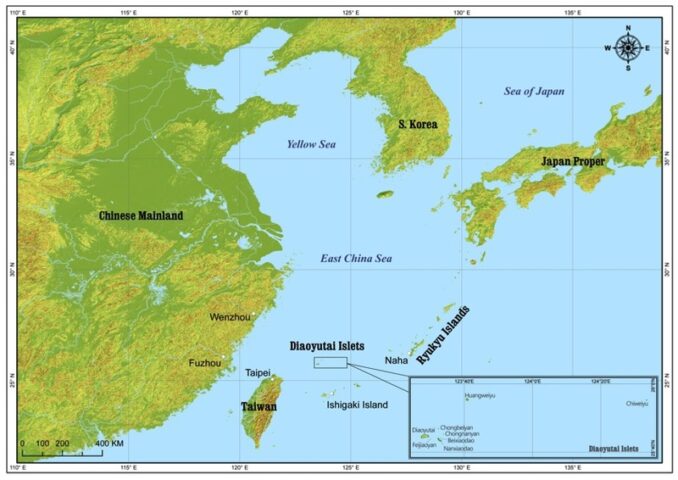
Okinawa is the largest of the Ryukyu islands.

The Dec. 16 announcement by Japan’s Prime Minister Fumio Kishida of a new defense strategy, while doubling military spending by 2027 to implement it, is the largest defense shake-up in decades and a wake-up call to the antiwar movement. 

The decision includes openly acquiring offensive weapons and reshaping its military command structure for its expanded armed forces. On Dec. 23, the draft budget was approved by Kishida’s cabinet.

Japan’s dangerous military expansion should set off international alarm bells. This major escalation is taking place based on intense U.S. imperialist pressure. It is the next step in the “Pivot to Asia,” aimed at threatening and surrounding China and attempting to reassert U.S. dominance in the Asia Pacific. 

The movements opposing endless U.S. wars must begin to prepare material and draw mass attention to this ominous threat.

The plan to double military spending will add $315 billion to Japan’s defense budget over the next five years and make Japan’s military the world’s third largest, after the U.S. and China. Defense spending will escalate to 2% of gross domestic product, equal to the goal the U.S. sets for its NATO allies. Japan’s economy is the world’s third largest. 

The Japanese government plans to buy up to 500 Lockheed Martin Tomahawk missiles and Joint Air-to-Surface Standoff Missiles (JASSM), procure more naval vessels and fighter aircraft, increase cyber warfare capabilities, manufacture its own hypersonic guided missiles and produce its own advanced fighter jets, along with other weapons. The plan shifts from relying solely on missile defense to also embracing “counterstrike” capabilities. 

Three key security documents — the National Security Strategy (NSS), as well as the National Defense Strategy (NDS) and the Defense Buildup Program (DBP) — shed some of the postwar constraints on the Japanese military.

Article 9 – a class struggle against military rearmament

Although the U.S. occupation force, after defeating Japan’s military in World War II, imposed a “pacifist” constitution on Japan, for decades now U.S. strategists have pressured Japan’s government to aggressively rearm, and especially to buy U.S.-made weapons, to act as a junior partner to U.S. efforts to dominate the Asia-Pacific region. 

Article 9 of the imposed Japanese constitution prohibits Japan from maintaining an army, navy and air force. To get around this, the “Japanese Self-Defense Forces” (JSDF) have since 1952 been treated as a legal extension of the police and prison system. The U.S. occupiers considered the JSDF an essential repressive tool defending capitalist property relations against the workers’ movement.

The decision for aggressive military expansion is in open violation of Japan’s supposedly pacifist constitution. 

The effort to “reinterpret” Article 9 has been a continuing political struggle inside Japan. Mass rallies of hundreds of thousands have mobilized many times in defense of Article 9, which offers a clear prohibition of Japan’s maintaining a military force. The widespread opposition to the Japanese military and to constitutional change comes from working people, mobilized by the unions and the communist and socialist movements. 

This movement pointed out to everyone how the wartime militarist regime of the 1930s and 1940s carried out brutal repression and led Japan into WWII. The people know from bitter experience that these ultrarightist forces, whose roots are in historic Japanese colonialism, are the real threat to their rights and the social gains they have made.

The present doubling of the defense budget will be funded by raising taxes. A huge military budget will inevitably mean severe cuts to the country’s limited social spending. 

The Liberal Democratic Party, which has held power almost continually since the 1950s, is right-wing, pro-military and allied to U.S. imperialism, especially against China and the DPRK. They have been pushing for an end to the constitutional and legal restrictions on the country’s military. 

The assassination of retired President Shinzo Abe on July 8, 2022, just two days before Japan’s election, brought additional votes to the LDP. It was able to win the two-thirds supermajority in Parliament, needed to move forward aggressively with its military plans. 

Targeting China

Japan’s military expansion fits in with Washington’s aggression aimed at China, the DPRK and Russia. U.S. strategists’ goal is to use the U.S. alliance with Japan, South Korea and Australia, just as it uses the U.S.-led NATO alliance in Europe.

The doubling of NATO’s membership and NATO’s targeting of Russia have led to war in Ukraine, when the U.S. government imposed thousands of new sanctions against Russia, and the U.S. has ruptured the European Union’s mutually beneficial trade with Russia. 

China is Japan’s largest trading partner in both imports and exports. Previous National Strategy Documents said Japan was seeking a “mutually beneficial strategic partnership” with China. Suddenly Japanese strategists started labeling China “the greatest strategic challenge in ensuring the peace and security of Japan.” (U.S. Institute of Peace, Dec. 19)

Japan had expanded trade with Russia in gas, oil, autos and machinery. Previously Japan’s Dec. 17, 2013, National Security Strategy document called for “enhanced ties and cooperation with Russia.” Now Japan considers Russia a “strong security concern.” (USIP, Dec. 19)

A U.S.-Japan alliance is now defined as a “cornerstone” of Japan’s security policy. (Japan Times, Dec. 17)

U.S. praise of Japan’s rising militarism

The U.S. media praised Japan’s new security strategy document as a “bold and historic step.” U.S. National Security Advisor Jake Sullivan praised the defense spending hike, which “will strengthen and modernize the U.S.-Japan alliance.” U.S. Secretary of State Antony Blinken called Japan an “indispensable partner” and cheered that the changed security documents reshape the ability to “protect the rules-based order in the Indo-Pacific region and around the world.” (quotes, whitehouse.gov, Dec. 16)

U.S. corporate power is the immediate beneficiary of this sharp turn in policy, built on military threats and economic sanctions. 

Foreign Affairs Magazine calls the announcement “a profound transformation” and states: “The new national security strategy, however, represents a stunning change. … [T]he government is enacting policies that have been debated for decades but were always blocked. Until now … Japan’s new national security strategy should be applauded. ” (Foreign Affairs, Dec. 23)

U.S. needs collaborators

U.S. policy toward the defeated capitalist class in Germany, Italy and Japan was remarkably similar. At the end of WWII, many of the industrial leaders who had backed these fascist regimes were quietly protected and rehabilitated in Japan, Germany and Italy, along with the fascist collaborators who fled from workers’ control in Eastern Europe. 

The U.S. and later NATO used the rehabilitated fascists against a rising workers movement in West Europe and against socialist construction in Eastern Europe. U.S. corporations, who had aggressively moved into the defeated Axis countries, needed insurance that their investments would be protected from the strike waves. 

By 1950 the U.S. was at war on the Korean peninsula and, while using U.S. troops in Korea, needed a military force for “peacekeeping and self-defense” of capitalist property relations in Japan. Germany, Italy and Japan began to rearm during that period. 

The impact on Okinawa

A chain of 150 islands called the Ryukyu Archipelago, of which the largest island is Okinawa, 400 miles from the Japanese mainland, is in reality a colony of Japan. Its population of 1.74 million people suffers from Tokyo’s rule and from the occupation by U.S. military bases. Okinawa is geographically closer to Taiwan than it is to the main islands of Japan.

Upgrading and strengthening Japanese ground units on Okinawa is part of the new National Security Strategy (NSS). Other islands, which are part of the chain southwest of Japan, will be further militarized. 

Upgrading of Japan’s 15th Brigade on these islands for future electronic warfare, cyber warfare and joint operations of the ground, maritime and air forces are clearly a sign of plans to intervene in the Taiwan Straits.

In recent years, Japan has deployed anti-ship and air-defense missiles on its southwest islands of Amami Oshima, Okinawa Main Island, Miyako Island and a missile base on Ishigaki Island, the island closest to Taiwan.

More than 50,000 U.S. troops remain as an occupying force in Japan, at present the largest U.S. occupation force in any country. More than half of U.S. troops are based on Okinawa.

Okinawa residents, the Indigenous Ryukyu people, have spent decades protesting the constant presence of the U.S. military in their daily lives. There are now 31 U.S. military installations on the island prefecture of Okinawa, which accounts for 74% of the area of all U.S. military bases in Japan, although Okinawa only constitutes 0.6% of Japanese territory.

The U.S. maintains 73 military bases and 28,500 troops in South Korea. Both South Korea and Japan are forced to pay for “hosting” these troops of occupation.

‘Using North Korea threat as cover’

Japan has previously justified its remilitarization by claiming North Korea is a threat. However, retired Maritime Self-Defense Force (MSDF) Admiral Tomohisa Takei told the media that China has been the main target for which Japan has been preparing, “by using North Korea’s threat as cover.” (AP, Dec. 17)

Both Japan and South Korea engage on a regular basis in coordinated military drills under U.S. command threatening Korea DPRK. Massive demonstrations in South Korea and missiles fired from targeted North Korea respond to these military provocations.

This cynical admission of the planning and preparation for war, while claiming self-defense, is similar to former German Chancellor Angela Merkel’s Dec. 8 admission that the signing of the 2014 Minsk Agreement was not a peace treaty with Russia. Merkel confirmed that NATO wanted war from the start but needed time to prepare Ukraine militarily. (interview in Die Zeit, Dec. 7)

Having goaded Russia into an invasion of Ukraine in a bid to weaken and fragment Russia, the U.S. is next seeking to turn Taiwan into a military quagmire for China. The Biden administration is facilitating Taiwan’s purchase of advanced weaponry from the U.S. and greater diplomatic ties with the island.

US War Games-Korea

As the US increases its presentation and the militarization of the Asia-Pacific, it is increasing the number and size of multinational military exercises, which are destabilizing international relations and stirring up fears of regional wars. Canada is not only an enabler, but an eager predator looking for action. 

After the US President, President Obama, introduced the Pivot to Asia foreign policy in 2008, US and allied military activities and alliances began to escalate. The US-ROK Team Spirit exercises were conducted annually from 1976 until 1994. The DPRK responded with its own military drills, missile testing, satellite launching and nuclear power development. The US-ROK exercises temporarily ended when the Republic of Korea and the Democratic People’s Republic of Korea announced their Joint Denuclearization Declaration in 1992. This declaration was followed by an agreement between the DPRK and the USA in 1994 in which the former would freeze its nuclear program, but allow the US, ROK and Japan to construct light-water nuclear reactors in the DPRK over 10 years. 

There was renewed hope in the early 2000s while South Korea had a centrist government, the Truth and Reconciliation Commission and a peace and reunification process that had slowly begun. The coming to power of the US-backed Lee Myung-Bak in 2008, however, dashed that hope. Then US Secretary of State, Hillary Clinton, took a pronounced aggressive stance against the DPRK (also known as North Korea), issuing threats regularly.  

During spring 2012, the US-ROK Combined Forces Command began its annual exercises called Key Resolve and Foal Eagle. In addition, the ROK took part in Cobra Gold, a multi-national exercise in Thailand that included the U.S., Japan, Thailand, Indonesia, Malaysia, and Singapore. The DPRK was thus put under more stress. The International Crisis Group, a group much appreciated by the imperialist Western nations, reported a DPRK state official claiming that the excercises were an “unpardonable grave military provocation to the sovereignty of the DPRK and a wanton challenge to the international community’s desire for peace and stability in the Korean Peninsula.” The Group also reported the Korean Central News Agency saying, “Key Resolve is a nuclear war rehearsal for aggression on the DPRK” and was testing test “nuclear war to invade the DPRK through a surprise attack.” 

Readers must remember also that the UN Security Council imposed multiple sanctions on the DPRK in 2006 and increased them in 2017, measures that have caused drastic shortages of imported food and medical care and thereby mass suffering and unnecessary deaths in the DPRK. 

Young South Korean men continued to be conscripted into 21 months of service and US required most of its armed forces personnel to serve one year in South Korea. South Korea is thoroughly militarized, to the point where a Korea arms industry can compete globally. The ROK Air Force sends fighter jets and personnel to Nellis Air Base in Nevada to participate in the Red Flag exercise in. The US has over 80 military installations including bases, training camps, watchtowers, supply depots, launch pads and the like in addition to its agreements to share ROK facilities and personnel. It keeps around 30,000 military personnel in the region. 

In the meantime, despite mass resistance, the foreign policy of the government of Japan has turned aggressive. When Japan committed itself to join the US war games around Korea in 2017, it was the first time its military had ventured beyond its own borders. With mixed feelings and against a wave of mass protest in her own country, the Rightist ROK President Park Geun-hye accepted a watery apology from the late Japanese PM Shinzo Abe, which accommodated the desire to enter into military agreements in so-called defense against the DPRK. Subsequently, Abe agreed to the expansion of the US’ Iwakuni air and naval base, and the construction of two more US bases in the Okinawa Islands. 

Tensions calmed down somewhat when US President Trump took a conciliatory tone with the DPRK and talked about nuclear de-escalation. The Biden presidency, on the other hand, is back to escalation and provocation. The new “Ulchi Freedom Guardian” war games of the US and ROK from August 22 to September 1, 2022, featured live fire on a “total war” premise. The latest affront is the Vigilant Storm air drills of the US, Japan and ROK from October 31 to November 4, 2022. The Diplomat reports that 240 F-35 and other warplanes were deployed for them. 

Protests against the November 2022 US-ROK “Vigilant Storm” air drills [courtesy TML)

The formation of the US, Australia and UK (AUKUS) alliance and prospects of a US, Japan, India and Australia alliance (QUAD), in addition to the build-up of the US military in Australia as part of the ANZUS deal (Australia and US), bring more danger. Meanwhile, NATO’s 2022 strategy claims the Indo-Pacific as its global center. This change will demand that NATO members contribute to the militarization and intensifying menacing activities against China and the DPRK. 
 

Canada’s part 

Despite US President Trump’s softer words with DPRK, Canadian and US hawks were circling above, ready to pounce on the peace negotiations that the ROK had initiated with the DPRK without the US. Clearly, the Canadian government wanted to disrupt the peace process. The US and Canada organized the Vancouver Foreign Ministers’ Meeting on Security and Stability on the Korean Peninsula in early 2018. This was one of Chrystia Freeland’s most outrageous moments. 

Though invited by her, then Canada’s Foreign Affairs Minister Chrystia Freeland shut the door on peace groups such as Korean Women Cross the DMZ and rallied the ministers to increase their hostility against the DPRK. The hostile rhetoric hurled at the DPRK was ratcheted up further than before. Her reason? — the “global challenge” posed by “the grave and growing threat posed by North Korea’s nuclear weapons and ballistic missile programs.” While stating she wanted to find a diplomatic solution, she insisted that the DPRK would have to abandon its ideology and own way forward before there could be a peace settlement, implying the goal of regime change. Then she announced enforcement of sanctions against NK’s “sanctions evasion” in partnership with the US, pledging $3.25 million for that purpose. [Her interventions seemed to be a spiteful response to South Korea’s independent initiative to hold talks with the DPRK in this period.] 

Ideology is no doubt a motivator. Just as NATO clearly states it is defending the economy, though, Canada’s interest is primarily economic. Global Affairs released an article about the Comprehensive and Progressive Agreement on Trans-Pacific Partnership (CPTPP), which Canada made with 11 countries in East Asia and South America on January 23, 2018. This press release writes, “In 2016, Canada’s bilateral trade with these seven partners totalled $71.3 billion.” Already enjoying one with South Korea, Canada was making Free Trade Agreements with all those states.  

Later, the Canadian Department of National Defense launched Operation Neon to enforce sanctions using frigates and surveillance aircraft [Hill Notes, July 27, 2021]. Military machinery is being used in peacetime against civilian targets such as freighters and merchant vessels to keep civilians from receiving daily necessities. 

Consistent with the DND’s current policy of seeking “engagement”, Canada has participated in Exercise Talisman Sabre off the coast of Northeast Australia with Australia, New Zealand, ROK, US and the UK in July of 2021. It also joined in the massive annual war games in the Pacific Rim known as RIMPAC, which launched from the Jeju base in South Korea and involved 22 countries in 2021 and was even bigger in 2022. Moreover, RCAF 407 Squadron joined in Exercise Sea Dragon in Guam in early 2021, winning a prize for tactical efficiency. 

Meanwhile, in November 2021, the Canadian government backed HanVoice, a CIA-front (National Endowment for Democracy) funded group based in Canada, by supporting its project to allow Canadians to privately sponsor refugees from the DPRK. HanVoice has worked to demonize the DPRK since its founding in 2007, with the then-Conservative government having Secretary of State (Multiculturalism and Canadian Identity) Jason Kenney, speak at HanVoice’s opening event. HanVoice has received assistance from both the Trudeau and Harper governments.  

While eyes are being diverted to the tensions over Taiwan province, readers should acknowledge that the Korean Peninsula is still a hot spot. The Korean war is not officially over; neither is the Korean revolution. Russia and China remain supportive of the DPRK, however tentatively, so a serious escalation has the potential to involve them. The DPRK’s possession of nuclear weaponry is certainly a key safeguard against a wholesale invasion by the US and friends including Canada, with Iraq and Libya showcasing the fate that countries which lack nuclear weapons, and oppose US geopolitical interests, have faced. At the same time, the danger of nuclear war on the Peninsula is real. 

What is urgently needed for security in the Korean Peninsula is a signed Peace Treaty, and that should be Canada’s foreign policy focus. Canada should urge the US to withdraw all troops from South Korea and Japan (along with occupied Okinawa), and stand out of the ROK and DPRK’s way, to let them hash out a peace treaty. Canada needs to give up its bellicose rhetoric towards the DPRK (and China) and adopt a peaceful foreign policy and stand back from the US position. Peace is possible between the ROK and DPRK, but not until the West ends the militarization of Korea and genuinely supports peace in the region. 

Editor’s note: The Canada Files has spent nearly three years doing critical investigative reporting on Canada’s imperialist foreign policy. … 

https://www.thecanadafiles.com/articles/what-is-canadas-involvement-in-military-exercises-targeting-the-dprk-destabilizing-asia